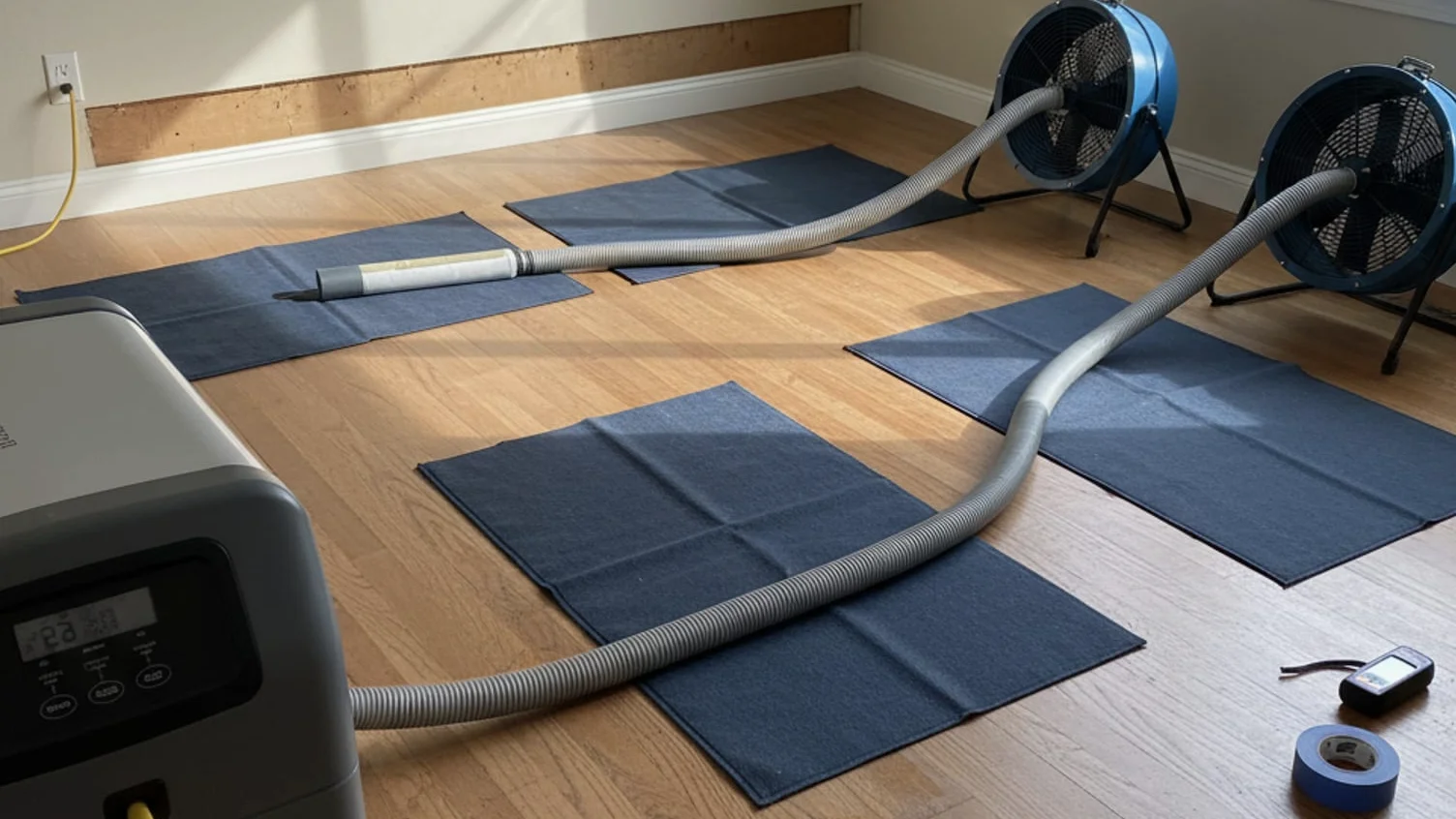
A hardwood floor can look dry and still be wet in the boards. The setup in the photo is the usual answer: a dehumidifier in the room, air movers pushing air across the floor, and flat mats laid on the wood so the airflow reaches the surface instead of just the open room.
Why the floor gets a mat instead of a fan in the corner
Water that sits on oak or similar plank flooring moves into the seams and the underside. A fan pointed at the room dries the air you walk through. It does a poor job on the board that is still cool and tight. The mat holds a path of air against the finish so the surface and the joint get the same treatment.
Ask the crew three things before they tape anything down:
- Which rooms are getting mats, and which are getting air movers only.
- How they will check the wood, not just the air. A pin meter or a non-invasive meter should be part of that, and they should say which one.
- What happens to the finish if the boards cup. Cupping is a shape change. It is not, by itself, a promise that the floor has to come out.
Dry Pro SD does not run the machines. The independent crew that sets them does. This page is the question list, not a scope of work.
What to leave in the room
Keep the path to the outlet clear. Do not stack rugs, boxes, or a sofa on a mat. The mat only works if air can move. If a cord has to cross a walkway, ask them to tape it flat and to say which breaker it is on.
Pets and small children do not belong in a room full of cords and moving air. Close the door. The rest of the house can stay in use if the crew says the contained room is the only wet one. If they have plastic up in the doorway, that is a containment choice. Ask what is on the other side of it before you assume the living room is clear.
What the reading means the next day
A lower number on a meter is not the same as “done” unless they tell you the target for that floor. Engineered plank and solid strip do not finish on the same schedule. A board that was underwater at the seam can need more time than a board that only got splashed.
Write down the first reading and the room name. Photograph the setup the way it was left, including the mats and the hoses, so a later visit can be compared to the same layout. If a mat is moved, the next reading is not the same test.
For the first day after the water stops, the homeowner notes on what to do in the first day cover shutoffs and photos. The drying work itself sits under water damage restoration. Neither page picks a price. The crew that sees the floor does.
When the mats come up
They come up when the crew says the wood is in the range they set, not when the room smells normal. A room can smell fine and still hold moisture under the finish. If they lift the mats and the wood looks wavy, ask whether that is expected to relax as it finishes drying or whether a flooring contractor should look at it after the meters are done. Those are different trades. One is drying. One is the floor that stays.
Keep the photos with the claim folder if you have a claim open. The carrier decides the claim. The crew decides when their equipment leaves. You decide who you hire for whatever work is left after that.