Water Extraction
Water extraction in San Diego County
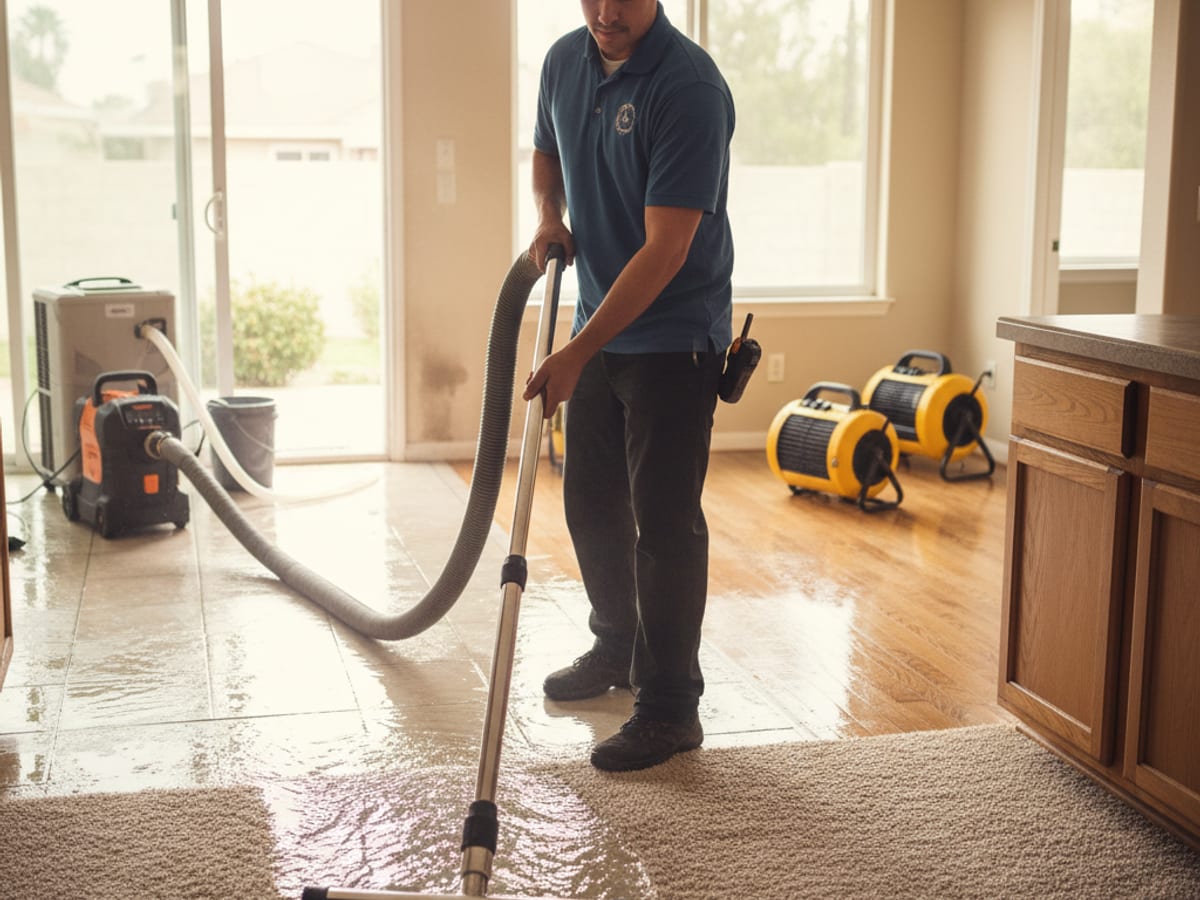
Standing water after an overflow or broken supply line can spread into adjacent rooms and beneath flooring. Extraction removes accumulated water; the wet materials left behind may still need evaluation and drying.
What should you ask about emergency water extraction?
- Ask how the professional will assess water under carpet, flooring transitions, baseboards, and in adjoining spaces. Extraction and drying are different steps: a surface can look dry while other materials remain wet. Discuss the proposed inspection and monitoring before agreeing to work.
- Where might water have traveled beyond the visible puddle?
- How will you determine whether underlayment or padding is wet?
- What follow-up moisture checks are included in your proposed work?
First steps for emergency water extraction
- Do not walk into water where electrical equipment, outlets, or cords may be energized. Never operate a switch while standing in water. Stay out of water that may contain sewage or other contamination, and describe its possible source when you request help.
What do homeowners ask about Emergency Water Extraction?
When can electric water-removal equipment be used?
CDC says a wet-dry vacuum may be used after an electrician has determined it is safe to turn on the electricity. Ask a qualified professional which equipment is appropriate for your situation.
Local guides
Explore Emergency Water Extraction topics in San Diego County
Local guides are being prepared. A listing does not establish provider availability.
Central Emergency Water Extraction in Lemon Grove Local guide in preparation
North County Inland Emergency Water Extraction in Valley Center Local guide in preparation
North County Inland Emergency Water Extraction in Rancho Santa Fe Local guide in preparation
East County Emergency Water Extraction in Lakeside Local guide in preparation
Backcountry Emergency Water Extraction in Campo Local guide in preparation
Backcountry Emergency Water Extraction in Jacumba Local guide in preparation
North County Inland Emergency Water Extraction in Hidden Meadows Local guide in preparation
North County Inland Emergency Water Extraction in Rainbow Local guide in preparation
See communities in the guide
AlpineBonitaBonsallBorrego SpringsBoulevardCamp PendletonCampoCarlsbadCasa de OroChula VistaCoronadoCrestDel MarDescansoDulzuraEl CajonEncinitasEscondidoFairbanks RanchFallbrookGranite HillsGuatayHarbison CanyonHidden MeadowsImperial BeachJacumbaJamulJulianKearny MesaLa JollaLa MesaLa PresaLake San MarcosLakesideLemon GroveMira MesaMission ValleyMount LagunaNational CityOceansidePacific BeachPalomar MountainPine ValleyPotreroPowayRainbowRamonaRanchitaRancho BernardoRancho PeñasquitosRancho San DiegoRancho Santa FeSan DiegoSan MarcosSan YsidroSanta YsabelSanteeScripps RanchShelter ValleySolana BeachSpring ValleyTecateTierrasantaValley CenterVistaWarner SpringsWinter Gardens
San Diego County
Need emergency water extraction in San Diego County?
Call (858) 330-3449 about water damage in San Diego County.