How to prevent mold after a water leak
Fix the source of moisture, arrange prompt drying, and ask a qualified professional how affected materials should be assessed.
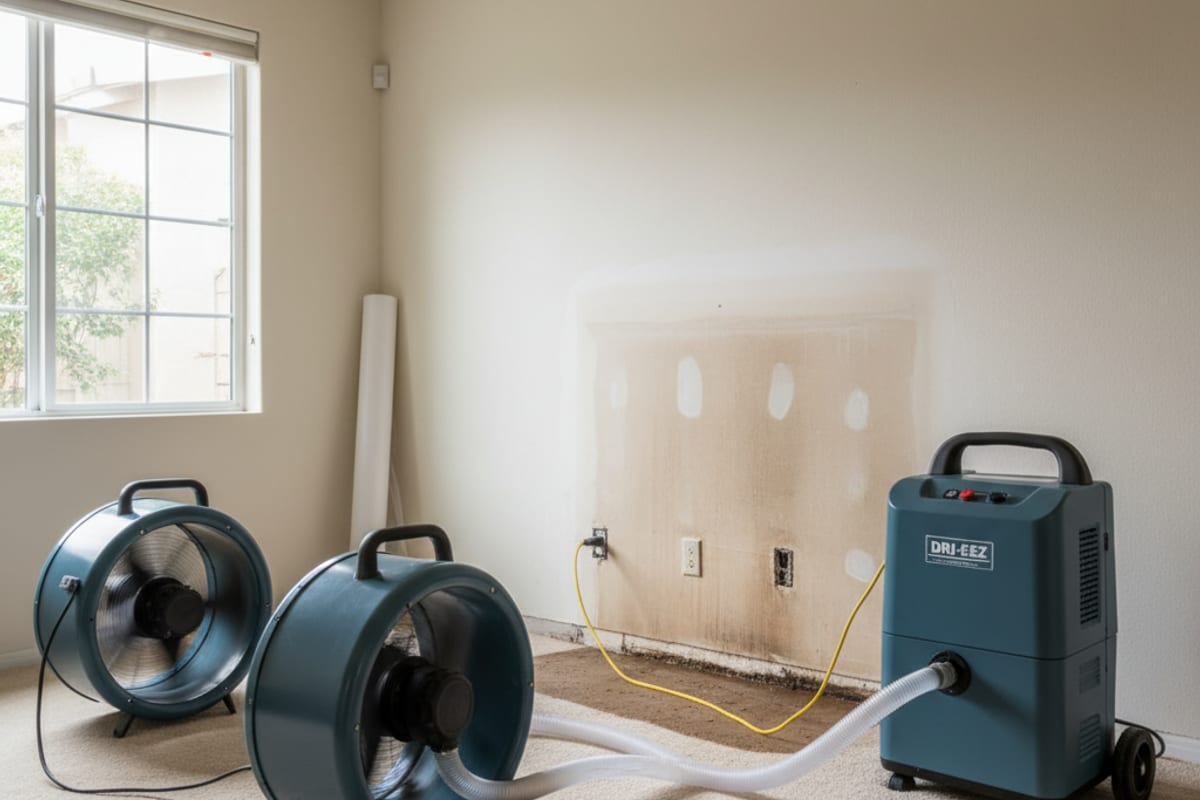
What you'll learn
- EPA recommends drying water-damaged areas and items within 24 to 48 hours where possible.
- Ask how the professional will assess and monitor wet materials
- Why a dry-looking surface may hide moisture behind it
- How the water source and material affect removal or drying decisions
Step by step
- Stop additional water only when the shutoff is safe to reach.
- Have the source repaired and identify affected adjoining spaces.
- Ask how wet materials and cavities will be checked.
- Avoid disturbing visible mold while planning cleanup.
- Ask how drying will be monitored and whether removal is needed.
Safety note
A dry-looking surface does not establish the condition behind it. Ask how concealed areas will be assessed.
Rather have a pro handle it?
Call (858) 330-3449 or send the details through the contact form.
More guides
Keep learning.
Safety · Written guide
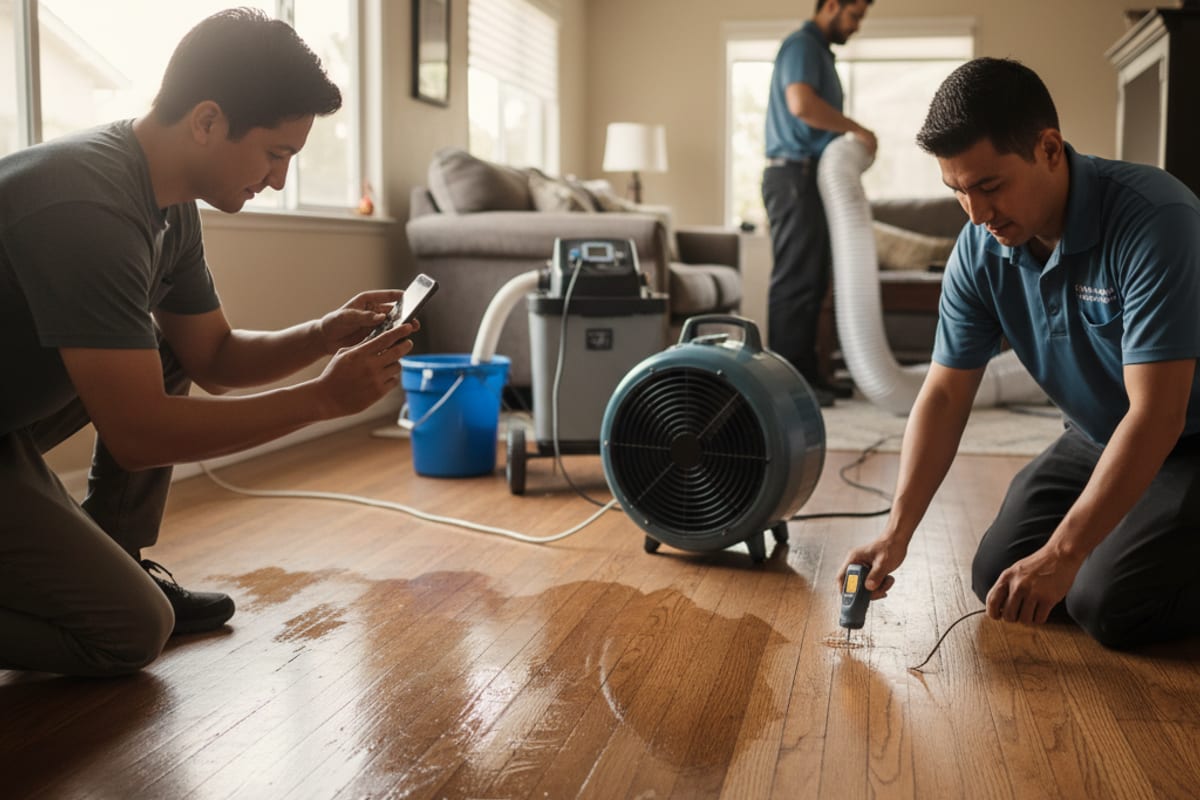
First hours after water damage
Start by protecting people, stopping the source only if safe, and recording what you can observe without entering a hazardous area.

Basics · Written guide
How to file a water damage insurance claim
Prepare a safe record of the damage and ask your insurer how your policy and its claims process apply.
Troubleshooting · Written guide
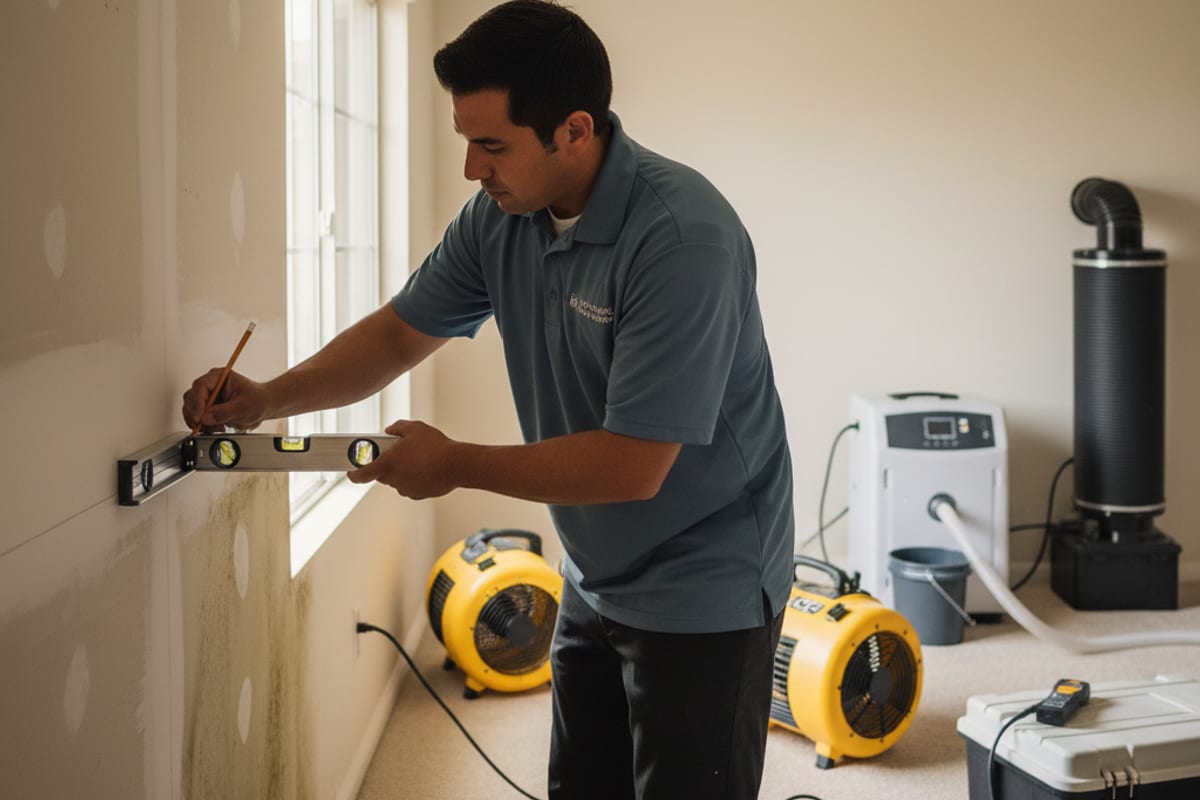
When to replace water-damaged drywall (vs. dry it in place)
The water source, condition of the wall and extent of moisture affect whether drywall can be dried or needs removal.